
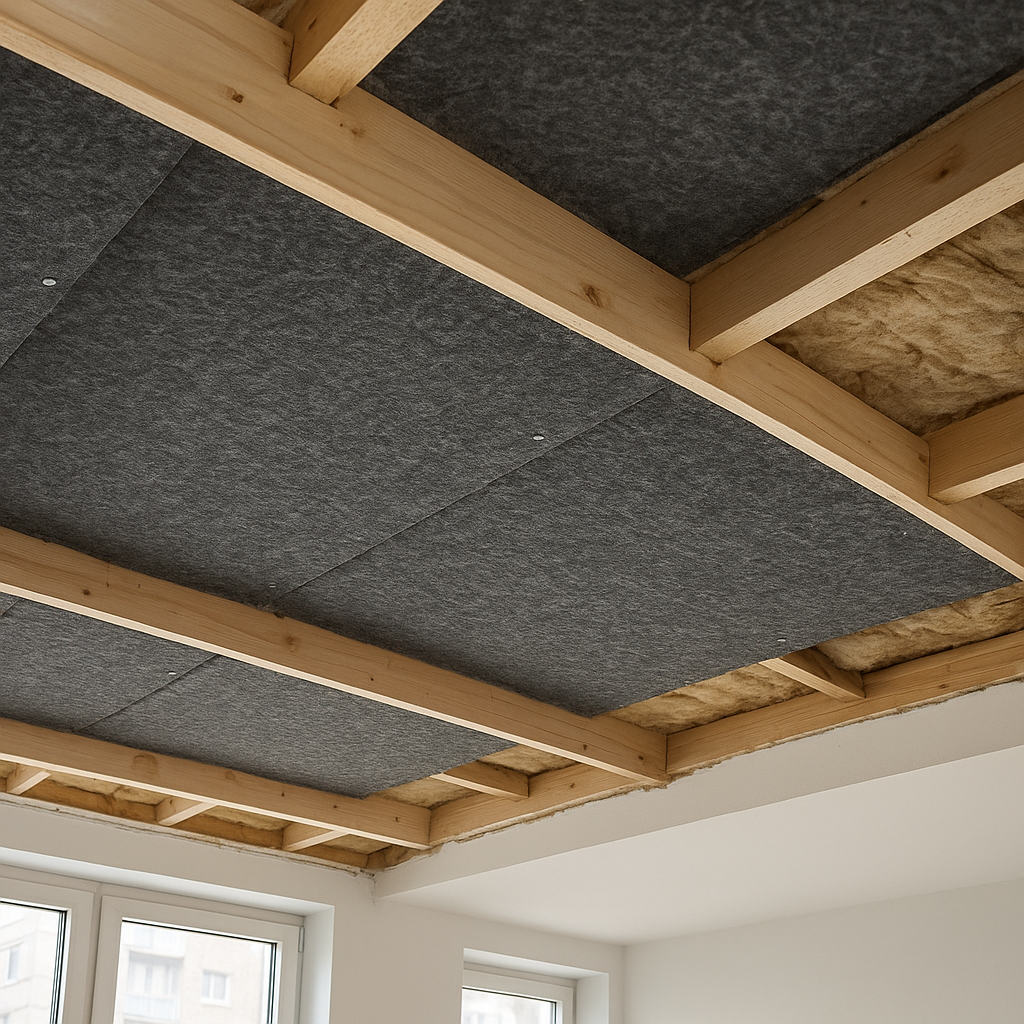
To soundproof a ceiling in an apartment, the most effective options include sealing gaps, adding drywall, installing mineral wool insulation, or building a decoupled ceiling. The right solution depends on the type of noise coming from upstairs. Voices, television, and music are airborne noise, while footsteps, moving furniture, and dropped objects create impact noise.
Airborne noise is generally easier to reduce with ceiling soundproofing. Impact noise is more challenging because vibrations travel through floors, walls, and other parts of the building. Although no method guarantees complete silence, combining appropriate materials and construction techniques can significantly improve acoustic comfort.
How to Soundproof an Apartment Ceiling: 4 Effective Methods
Different ceiling soundproofing methods address different problems. Some require only minor repairs, while others involve modifying the ceiling structure.
| Method | Best For | Construction Required |
|---|---|---|
| Acoustic sealant | Airborne noise through gaps | Minor work |
| Additional drywall | Primarily airborne noise | Yes |
| Mineral wool insulation | Airborne noise within ceiling cavities | Yes |
| Decoupled ceiling | Airborne and some impact noise | Yes |
1. Seal Gaps and Cracks in the Ceiling
Even small openings can allow sound to travel between apartments. Gaps around ceiling edges, wall connections, and utility penetrations may reduce the effectiveness of an otherwise solid ceiling.
Acoustic sealant is designed to remain flexible and help limit sound transmission through appropriate joints and openings. It can be applied around accessible ceiling-to-wall connections and other suitable gaps.
According to the Journal of Light Construction, identifying and sealing gaps is an important part of reducing airborne noise between apartments.
However, sealant alone will not substantially reduce footsteps or vibrations traveling through structural framing. It works best as a supporting measure alongside other soundproofing improvements.
Never seal ventilation openings or modify electrical fixtures without professional guidance. Penetrations in fire-rated assemblies require appropriate approved materials and methods.
2. Add Extra Drywall for Soundproofing
Adding mass to a ceiling can reduce the amount of airborne sound passing through it. One common approach involves installing an additional layer of drywall over the existing ceiling.
Contractors often use 5/8-inch drywall because its greater mass can provide better sound isolation than thinner panels in suitable assemblies. A specialized damping compound between drywall layers can further reduce vibrations within the construction.
This approach can help with conversations, television noise, and music coming from upstairs. However, drywall attached directly to the existing structure generally provides less improvement against footsteps and other impact sounds.
Before adding drywall, the ceiling framing and attachment system must be able to support the extra weight. Building requirements and existing fire-rated construction also need to be considered.
3. Install Acoustic Insulation Above the Ceiling
Mineral wool insulation helps absorb sound energy within ceiling cavities. It is especially useful when installed between floor joists as part of a larger soundproofing assembly.
As explained by ROCKWOOL’s acoustic ceiling insulation guide, insulation can reduce sound transmission between adjacent spaces and improve the acoustic performance of suspended ceiling constructions.
However, mineral wool does not completely block sound by itself. It is generally more effective when combined with drywall, airtight joints, and vibration-isolating components.
Installation typically requires access to the ceiling cavity, either through renovation of the existing ceiling or construction of a new suspended assembly. This makes it more practical for apartment owners undertaking renovations than for renters seeking temporary improvements.
4. Build a Decoupled or Suspended Ceiling
A decoupled ceiling is among the most effective options for reducing noise from upstairs neighbors when construction is possible.
The principle is to create a new ceiling surface with fewer rigid connections to the floor structure above. Sound isolation clips combined with metal channels, or properly designed resilient channel systems, help reduce the transmission of structural vibrations.
A typical assembly may include mineral wool insulation in the cavity and one or more layers of drywall attached to the isolation system. These components work together: insulation absorbs sound within the cavity, drywall adds mass, and resilient connections limit vibration transfer.
This approach can improve protection against both airborne noise and some impact noise. However, footsteps may still be heard because vibrations can travel through surrounding walls and other structural elements.
Decoupled ceilings require professional planning and installation. They reduce available room height and may involve changes to lighting, sprinklers, and other ceiling fixtures.
How to Soundproof an Apartment Ceiling Without Construction
For renters, permanent apartment ceiling soundproofing may not be possible without permission from the property owner. Fortunately, several practical measures can make unwanted noise less disruptive.
- Ask about rugs or carpeting upstairs. Thick rugs with dense underlayment can reduce footsteps and furniture noise by cushioning impacts before they enter the floor structure. If communication with upstairs neighbors is possible, this can be one of the most useful solutions.
- Use acoustic panels realistically. Fabric-covered panels and acoustic foam can reduce echoes inside your own room. However, they do little to stop sound passing through the ceiling, so they should not be treated as substitutes for structural soundproofing.
- Try a white noise machine. Consistent background sounds may make occasional conversations or other noises less noticeable. This masks noise rather than preventing it from entering the apartment.
- Contact the landlord or property manager. Ask whether gaps, damaged ceiling sections, or construction defects can be inspected and repaired. Building management may also be able to discuss flooring improvements upstairs.
Decorative soundproofing stickers, thin foam tiles, and similar products are unlikely to provide meaningful isolation from upstairs neighbors. Effective sound blocking generally requires mass, airtight construction, vibration isolation, or a combination of these elements.
What Is the Best Way to Reduce Noise From Upstairs Neighbors?
The best solution depends on the source of the noise and the apartment’s construction.
- Voices and television: Sealing gaps, adding drywall, and insulating ceiling cavities can help reduce airborne sound transmission.
- Footsteps and moving furniture: A decoupled ceiling can help, but adding carpets, underlayment, or other acoustic treatments to the upstairs floor is often more effective at controlling impacts.
- Occasional disturbances: White noise and other masking methods may offer temporary relief when renovations are not possible.
Sound can also travel through walls, plumbing penetrations, and structural connections. Consequently, improving only the ceiling may not eliminate every source of noise.
Before undertaking major work, apartment owners should check building rules, fire-safety requirements, and any necessary approvals. Renters should obtain permission before making permanent modifications.
For substantial noise problems, a properly designed decoupled ceiling combining insulation, resilient connections, and drywall generally offers the most comprehensive improvement from below. For minor airborne noise, sealing gaps or adding mass may be sufficient. When construction is prohibited, reducing impact noise at the upstairs floor is often the most practical approach.