
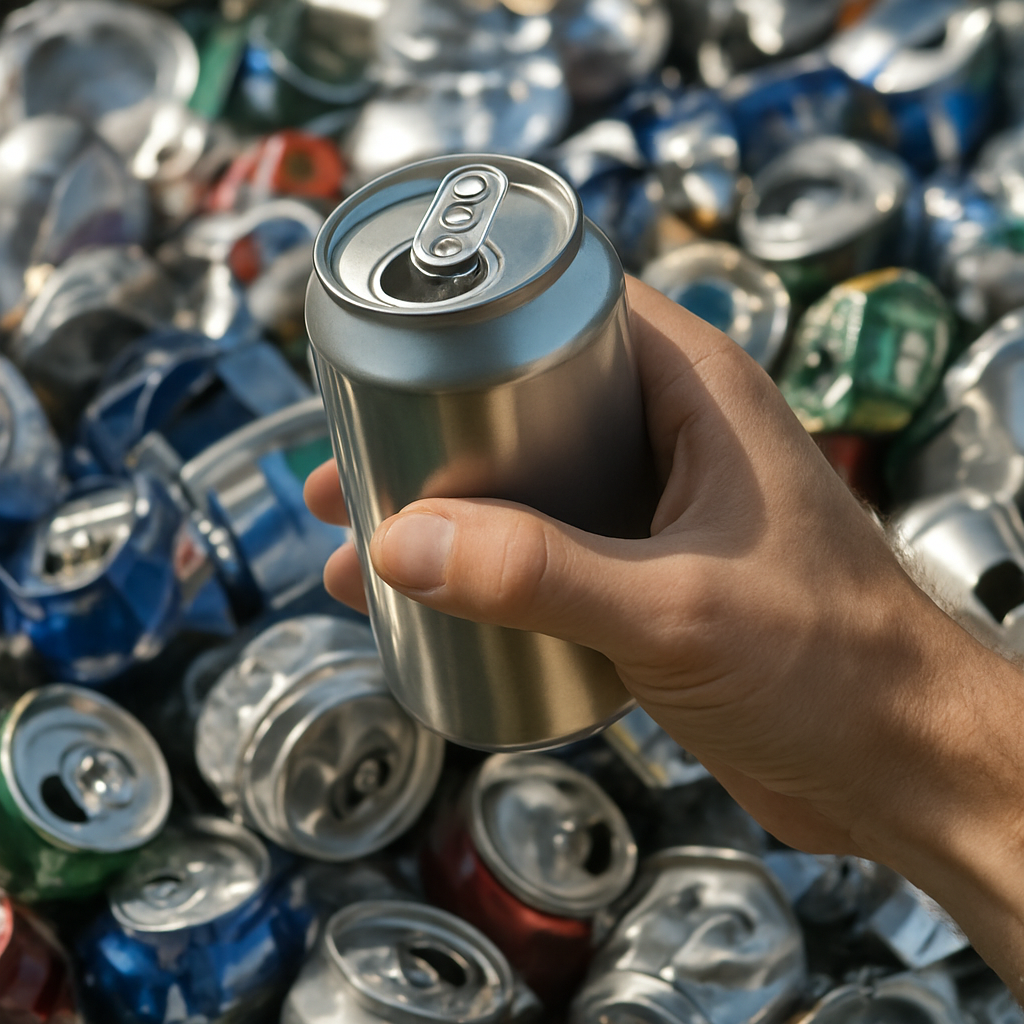
You can make approximately $13–$26 recycling 1,000 aluminum cans at a U.S. scrap yard, depending on local metal prices. Scrap yards generally pay by weight, while states with beverage container deposit programs offer refunds of 5–10 cents per eligible can. That means 1,000 qualifying cans could return $50–$100 through a deposit program, although this is a refund of previously paid deposits rather than additional earnings.
The amount you receive depends on where you live, how many cans you collect, and whether you sell them as scrap metal or redeem them through a state deposit program.
How Much Are Aluminum Cans Worth?
Empty aluminum cans have scrap value because recycling facilities can recover and reuse the metal. Most scrap yards purchase cans by the pound (lb), not individually.
According to ScrapMonster’s aluminum can price listings, the national average was approximately $0.45 per pound in a mid-October 2026 update. A later update on October 19 listed an average of $0.62 per pound, illustrating how prices can change.
For practical estimates, a range of $0.40–$0.80 per pound is useful, but it is not a guaranteed nationwide rate. Individual recycling centers may pay less or more.
Several factors determine how much aluminum cans are worth:
- Scrap aluminum prices: Local purchase rates change with demand and market conditions.
- Total weight: More aluminum generally means a higher payment.
- Recycling center rates: Different scrap yards may offer different prices for the same material.
- State deposit programs: Eligible beverage containers may qualify for a fixed refund instead of ordinary scrap payment.
Approximately 31–33 standard empty aluminum beverage cans weigh one pound, although the exact number varies by size and construction. At $0.40–$0.80 per pound, a single can is worth roughly 1–3 cents as scrap metal.
How Much Money Can You Make Recycling 100, 500, or 1,000 Cans?
The following estimates assume approximately 31 aluminum cans per pound and scrap prices between $0.40 and $0.80 per pound.
| Number of Cans | Estimated Scrap Value |
|---|---|
| 100 cans | $1.30–$2.60 |
| 500 cans | $6.50–$12.90 |
| 1,000 cans | $13–$26 |
| 5,000 cans | $65–$129 |
To calculate potential earnings, use this formula:
Number of cans ÷ cans per pound × scrap price per pound = estimated earnings.
For example, suppose you collect 1,000 empty aluminum cans and your local scrap yard pays $0.60 per pound:
- 1,000 ÷ 31 = approximately 32.26 pounds.
- 32.26 × $0.60 = approximately $19.35.
In this situation, recycling 1,000 cans would earn about $19 before transportation and other expenses.
These calculations are estimates. Actual payments depend on the weight recorded by the recycling center and its purchase price on the day you sell your cans.
Can You Make More Money in Bottle Deposit States?
Some U.S. states operate beverage container deposit programs, commonly called bottle bills. Consumers pay a small deposit when purchasing eligible drinks and can recover that amount by returning the empty containers.
This differs from selling aluminum by weight. A deposit refund is based on the container’s eligibility and the applicable state rules, not simply its scrap metal value.
Examples include:
- California: Eligible containers smaller than 24 fluid ounces have a 5-cent California Redemption Value (CRV), while containers of 24 ounces or more have a 10-cent value.
- Michigan: The state provides a 10-cent refund for qualifying beverage containers.
- Oregon: Eligible beverage containers carry a 10-cent refundable deposit.
These amounts are established by state programs, including California’s Beverage Container Recycling Program and the Oregon Bottle Bill.
At a refund value of 5–10 cents per container, 100 eligible cans represent $5–$10, while 1,000 cans represent $50–$100. Actual payments depend on program rules. For example, California generally guarantees payment by individual count for up to 50 eligible aluminum containers per transaction; larger quantities may be redeemed by weight.
Not every aluminum can qualifies. Eligibility depends on the beverage category, state requirements, and applicable container labeling.
Importantly, the deposit is money originally collected when the beverage was purchased. You generally cannot receive both the full deposit refund and a separate scrap payment for the same can.
Where Can You Recycle Cans for Money?
There are several places where you can exchange empty aluminum cans for cash or a deposit refund.
- Scrap yards: Metal recycling businesses purchase aluminum cans by weight. Payment depends on the yard’s current rate and the weight of your collection.
- Bottle redemption centers: Facilities in participating states accept eligible beverage containers and provide refunds under local deposit laws.
- Reverse vending machines: Automated machines available at some stores and redemption locations accept qualifying containers and issue refunds or redemption receipts.
Before visiting a recycling location, check its operating hours, accepted materials, payment rates, and minimum quantity requirements.
Empty and reasonably clean cans are generally easier to process. Scrap yards may accept crushed cans, but deposit redemption machines often need intact containers to identify barcodes. Check the receiving facility’s rules before crushing your collection.
Is Recycling Aluminum Cans Worth It?
Recycling aluminum cans can provide extra money, but the financial benefit depends heavily on the quantity collected.
A few dozen cans usually generate less than a dollar at ordinary scrap prices. Collecting several hundred cans may produce a few dollars, while thousands of cans can bring a more noticeable payment.
Deposit programs often provide a higher return per eligible container than scrap yards. However, that payment generally represents a refund of money already paid when purchasing the beverage.
Transportation and time also matter. Driving a long distance to redeem cans worth only a few dollars may cost more than the payment itself. Regularly collecting large quantities and using a nearby recycling facility can make the process more worthwhile.
Overall, recycling aluminum cans can be a practical source of small additional payments, especially when you collect large volumes or return eligible containers through deposit programs. However, scrap prices fluctuate, and collecting cans does not guarantee substantial or consistent income.